Bonded & Insured
Carmel, IN

Siding Contractor in Carmel, IN Built for Hail, Heat & Hard Indiana Winters

Siding in Carmel goes through a lot. Over a year the temperature swings by about 100°F, from below-zero cold snaps to 90-degree July afternoons. Spring brings hail and straight-line winds through Hamilton County, and we get 40-plus inches of rain that will find any gap in the flashing. Builder-grade vinyl from the '90s goes wavy and brittle. Old hardboard rots at the drip edges. Water gets behind the panels and quietly ruins sheathing for years before anyone sees it. Carmel Siding Company has been fixing exactly these problems since 1999. We install, repair, and replace siding the right way for Central Indiana's climate.

Since we're local, we already know the houses here. We know the brick-front colonials in Brookshire and Springmill Streams, the HOA review boards in Westfield and Fishers, and the wooded custom lots in Meridian Hills and Williams Creek. We match materials to each home and each set of covenants, whether that's insulated vinyl, James Hardie fiber cement, or board and batten. We flash the joints where brick meets siding properly, and we write estimates that account for rotted sheathing before the tear-off starts.

  • Serving Carmel and nearby communities since 1999
  • Bonded and fully insured
  • Financing available on qualifying projects
  • Free written estimates
Free Estimate

Request Your Free Estimate

No obligation. Fast, honest quotes.

Prefer to talk? Call (317) 779-1986 — your details are never shared.

Credentials & Certifications BondedInsuredFinancing available
What We Do

Siding Services for Carmel and Hamilton County Homes

We handle every part of siding work, from a single cracked panel to tearing off a whole house and re-siding it in fiber cement. Every recommendation is based on your home's age, exposure, HOA rules, and budget. We'd rather fix a $600 problem honestly than sell you a project you don't need.

Siding Repair

We replace cracked, holed, loose, or storm-damaged panels and boards, fix trim and corners, and correct small water-entry points. Our goal is to bring back protection and appearance without re-siding walls that still have years left in them.

We check the sheathing underneath before closing anything up, re-fasten panels to manufacturer nailing schedules, add flashing where it was missing, and source the closest color and profile match we can, including salvaging matching panels from less visible walls.

Most repair calls come from hail cracks on 1990s Carmel colonials, wind-loosened gables in Westfield and Noblesville, and limb strikes on wooded lots in Meridian Hills. Many '90s colors are discontinued, so we tell you up front how close a match is realistic.

Best for: Homes with isolated damage on otherwise sound siding, recent storm damage on a single elevation, and owners who want to stretch the life of their current siding.

Explore
Siding Installation

We install new siding systems on additions, new builds, and fully stripped walls. That includes the water-resistive barrier, flashing, trim, and accessories that make the siding actually perform in Indiana weather.

Every installation follows Indiana Residential Code requirements and the manufacturer's written instructions. That means proper housewrap laps, flashed window and door openings, kick-out flashing at roof-wall intersections, and correct expansion gaps and clearances.

We do a lot of additions and sunrooms in Carmel and Fishers, where new siding has to blend with the existing brick fronts. We also install on custom builds in Zionsville and Westfield, where HOA committees spell out the material and trim profile.

Best for: Home additions, new custom construction, garage conversions, and any project where siding has to integrate cleanly with brick, stone, or existing walls.

Explore
★ Specialty

Siding Replacement

We do full or full-elevation tear-off and replacement of failing, outdated, or storm-damaged siding. That includes sheathing repair, new weather barrier, and an upgrade to a better product if you want one. This is the most common project we do in Hamilton County.

We remove the old siding down to the sheathing, document and repair any rot, install a new WRB and flashing details, and add insulation board if you choose to. Then we install the new siding and trim, and finish with a full cleanup and magnetic nail sweep.

We regularly replace failing hardboard on 1985–1996 homes, brittle builder-grade vinyl in Brookshire and Woodland Springs, and hail-damaged elevations after spring storms. Our estimates spell out sheathing allowances so a surprise change order doesn't wreck your budget.

Best for: Hardboard or OSB siding, chalky or brittle 25-year-old vinyl, hail claims with unmatched colors, and owners who want better curb appeal, energy performance, or resale value.

Explore

Siding Inspection

A walk-around evaluation of every elevation, looking for storm damage, rot, water entry, installation defects, and remaining service life. You get a clear written summary and honest recommendations, including telling you when nothing needs to be done.

We probe suspect areas for soft sheathing, check flashing at windows and roof-wall junctions, check nailing and expansion gaps, and photograph the findings. When it makes sense, we lift panels to look behind them.

These are especially useful after hail and wind events in Hamilton County, before you list a home in Carmel's competitive resale market, and when you buy a 1980s–90s home that might have hardboard or early vinyl.

Best for: Post-storm damage checks, pre-listing or pre-purchase evaluations, insurance documentation, and homeowners who suspect hidden moisture but aren't sure.

Explore

Siding Maintenance

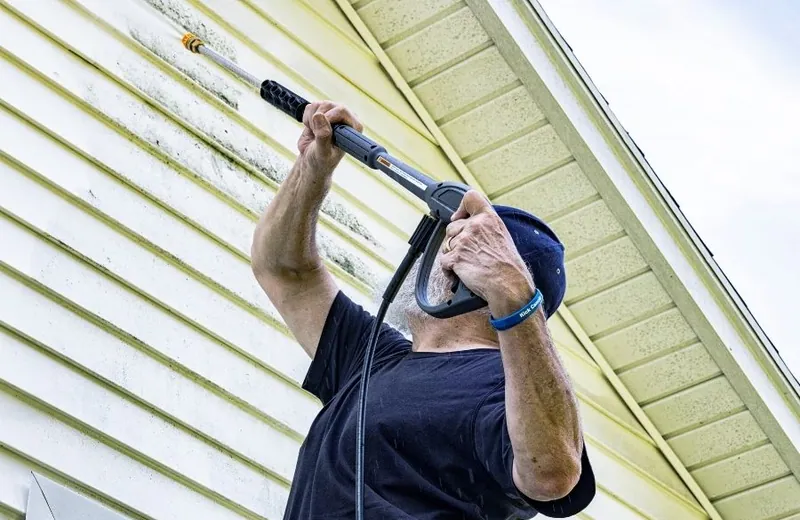
Scheduled care that keeps siding performing longer: cleaning off mildew and algae, re-sealing joints, fixing small failures, touching up fiber cement and wood, and catching small problems before they turn into replacements.

We clean at low pressure so we don't force water behind the panels, replace failed caulk with sealants rated for the conditions, re-secure loose pieces, and give you a short condition report after each visit.

Ideal for shaded homes in Meridian Hills, Williams Creek, Brendonwood, and Rocky Ripple, where humidity and tree cover feed mildew, and for cedar and wood clapboard homes in Old Town Carmel that need regular attention.

Best for: Homes with cedar or wood siding, heavily shaded lots, fiber cement homes due for joint and paint care, and owners protecting a recent investment.

Explore

Vinyl Siding Installation

We install standard, premium, and insulated vinyl siding with correct fastening for Indiana's large thermal swings. Vinyl is still a cost-effective, low-maintenance option for many Carmel-area homes.

We recommend thicker premium or insulated panels over thin builder-grade products, nail in the center of the slots with proper float, leave correct end gaps, and use matching trim, J-channel, and soffit for a clean finish.

Vinyl makes sense on many Fishers, Noblesville, Whitestown, and Lawrence homes, and on the sides and back of brick-front colonials. Insulated vinyl adds thermal value and impact resistance against hail, and both matter here.

Best for: Budget-conscious re-siding, HOA communities that allow vinyl, homeowners who want low maintenance, and energy upgrades on homes with cold-winter heating costs.

Explore

Fiber Cement Siding Installation

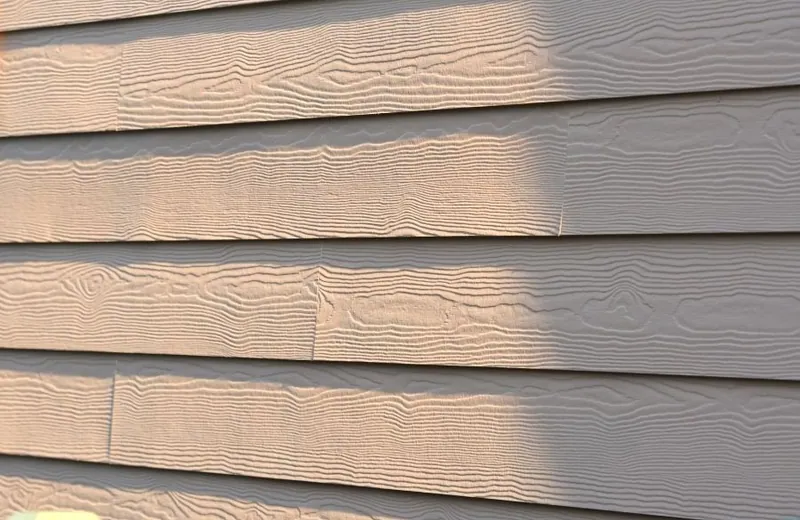
We install fiber cement lap, panel, shingle, and trim products. Fiber cement resists hail, fire, rot, and insects, and it holds paint far longer than wood. It's a big upgrade over hardboard or aging vinyl.

We follow the manufacturer's clearance, joint flashing, and fastening requirements, cut with dust-controlled methods, seal the cut edges, and use factory-finished or properly primed boards so the finish holds up through freeze-thaw cycles.

Fiber cement is increasingly the standard in Carmel, Westfield, and Zionsville HOA communities, and it's a common replacement for failing hardboard on mid-'80s to mid-'90s homes. It also suits infill builds near the Arts & Design District.

Best for: Homeowners who want durability, a premium look, and stronger resale value, and HOAs that restrict vinyl or require cementitious siding.

Explore
★ Specialty

James Hardie Siding Installation

We install James Hardie fiber cement siding and trim, including lap, shingle, and vertical panel profiles. Hardie is the brand Carmel-area buyers and HOA committees ask for by name most often.

Installation follows James Hardie's written instructions, which govern product warranty coverage. That includes required clearances at roofs, decks, and grade, flashed butt joints, approved fasteners, and correct WRB integration at every opening.

We use Hardie to replace Masonite and LP hardboard across Hamilton County, to upgrade hail-prone homes in Carmel and Fishers, and for premium exteriors in the Village of WestClay and Zionsville, where curb appeal and resale value really count.

Best for: Long-term homeowners, hardboard replacement projects, premium neighborhoods, and anyone who wants a name-brand fiber cement product backed by its manufacturer.

Explore

Board and Batten Siding Installation

We install vertical board and batten siding in fiber cement, engineered wood, or vinyl, either as a full exterior or as an accent on gables, entries, and bump-outs. It's the look behind the modern farmhouse trend.

Vertical siding needs different detailing than lap. We use proper furring or blocking where required, flashed horizontal transitions, correctly spaced battens, and sealed tops so water can't sit in the channels.

Board and batten is popular on new homes in Westfield's Grand Park area, modern farmhouse infill near Old Town Carmel, and gable accents that update 1990s colonials in Carmel and Fishers without a full re-side.

Best for: Modern farmhouse and transitional designs, accent walls and gables, curb appeal refreshes, and homeowners who want something different from standard horizontal lap.

Explore
Know The Signs

Common Siding Problems We See Across Carmel and the North Side

Most of the siding calls we get trace back to a handful of causes: storms, aging builder-grade materials, and installation shortcuts that Indiana weather eventually exposes. Here's what to look for, why it happens here, and how serious each problem is. That way you can decide whether to act now or plan ahead.

Storm-Torn Siding and Exposed Sheathing Emergency

This is when straight-line winds or a severe thunderstorm rip panels off a wall and leave the housewrap or bare OSB sheathing open to rain. It's usually on gable ends or second-story walls. Once sheathing is exposed, water damage starts with the next storm, so it needs a temporary dry-in within days.

Why it's common here

From April through June, Hamilton County regularly sees tornado watches and derecho-type wind events. Tall two-story walls in newer subdivisions catch the full force of the wind, especially in open areas around Westfield's Grand Park, Whitestown, and Noblesville. Builder crews in the 1990s and 2000s sometimes skipped nails or nailed outside the hem, so the panels unzip at lower wind speeds than they should. Cold vinyl is also more likely to snap than flex when a gust hits it.

Signs you'll notice
  • Missing panels on gables, dormers, or upper walls
  • Visible housewrap or bare OSB from the yard
  • Siding pieces or J-channel scattered in the lawn
  • Panels flapping or unlocked at the seams
  • Water stains inside on upper-floor walls after a storm
Local patterns

We see the most wind loss in exposed newer neighborhoods in Westfield, Whitestown, and Noblesville that have few mature trees. On wooded lots in Meridian Hills, Williams Creek, and Zionsville, falling limbs cause more of the damage, puncturing siding and bending trim.

Our fix: We put up an emergency tarp or wrap dry-in, document the damage for your insurer, then replace the panels or the full elevation with corrected fastening so it holds through the next storm.

Hail Damage to Vinyl and Aluminum Siding Serious

Hail 1 inch or larger cracks, chips, and punches holes in vinyl, and it dents aluminum. The damage can look cosmetic, but cracked vinyl lets water behind the wall. Many 1990s colors are discontinued, so even small repairs can turn into matching disputes with your insurance company.

Why it's common here

Spring and early-summer storm cells in Central Indiana bring large hail often enough that insurance re-siding is routine here. Thin builder-grade vinyl, about 0.040 inch, cracks much more easily than premium panels, and older vinyl that's been sun-faded for 25 years is even more brittle. The aluminum siding still common on 1950s–70s ranches in Lawrence and North Indianapolis dents with almost any hailstone. Since so many original profiles and colors are no longer made, adjusters and homeowners often end up debating full-elevation replacement.

Signs you'll notice
  • Cracks or round holes on the walls facing the storm
  • Dents or dimples in aluminum siding
  • Chipped or spattered paint on trim and fascia
  • Dented gutters, downspouts, or AC fins
  • Granules from the roof collecting near the foundation
  • Neighbors filing claims after the same storm
Local patterns

West- and northwest-facing walls take most of the hail in Carmel's 1990s subdivisions like Brookshire and Woodland Springs. After big storm events, out-of-state crews flood Hamilton County, so it pays to hire a local contractor who'll still be around to stand behind the work.

Our fix: We inspect every elevation, photograph and measure the damage, meet your adjuster if you want us there, and replace panels or whole elevations with the closest available match or an upgraded product.

Rotting Hardboard and OSB Lap Siding Serious

Composite hardboard and OSB lap siding, sold as Masonite and LP Inner-Seal type products, is made of wood fibers held together with resin. Once water gets past the paint, it swells, softens, grows fungus, and crumbles. The worst spots are usually drip edges, butt joints, and the bottom courses.

Why it's common here

Builders used this product heavily on homes in Hamilton County and the surrounding area from the mid-1980s to the mid-1990s. Thirty-plus years of Indiana freeze-thaw cycles, wet springs, and humid summers have broken down the paint film on most of it. Clay-heavy glacial till soil and poorly graded yards splash water onto the lowest courses. In our experience, the sheathing behind it is often rotted too, which is why you want a contractor who prices for that possibility from the start.

Signs you'll notice
  • Swollen, puffy board edges, especially at the bottom
  • Soft spots that give when you press a screwdriver in
  • Paint that won't stay on, plus visible fiber texture
  • Mushrooms or fungus at board ends
  • Wavy courses and popped nail heads
  • Woodpecker or insect holes
Local patterns

This shows up throughout Carmel, Fishers, and Noblesville subdivisions built roughly 1985–1996, along with some Laurelwood and Johnson Addition-era additions. Most owners replace it with James Hardie fiber cement or insulated vinyl instead of patching it.

Our fix: Full tear-off, sheathing inspection and replacement where it's needed, a new water-resistive barrier and flashing, then fiber cement or insulated vinyl installed to the manufacturer's specifications.

Water Intrusion Behind Siding Serious

This is moisture that gets past the siding because of missing housewrap, bad window flashing, missing kick-out flashing, or J-channel that wasn't detailed right. It soaks the OSB sheathing, sill plates, and framing. The siding itself can look perfectly fine while the wall underneath decays.

Why it's common here

Central Indiana gets about 40–44 inches of precipitation a year, and spring is the wettest. Wind-driven rain is common during storms. Carmel's brick-front, siding-on-sides homes create lots of transitions where brick meets siding, plus roof-to-wall intersections at bump-outs and gables. If those spots aren't flashed correctly, water runs straight into the wall. Production-home crews in the 1990s and 2000s often left out kick-out flashing entirely, and the Indiana Residential Code now specifically requires flashing at these openings.

Signs you'll notice
  • Peeling paint or stains on interior walls below windows
  • Musty odor in rooms on exterior walls
  • Soft or spongy wall areas under roof lines
  • Stained or rotting trim at window corners
  • Siding streaks below roof-to-wall intersections
  • Ants or termites near sill plates
Local patterns

Common at brick-to-siding transitions on 1990s colonials in Springmill Streams and Brookshire, and below roof valleys on complex newer homes in the Village of WestClay. Rocky Ripple, which sits between the White River and the Central Canal, also deals with extra ground moisture.

Our fix: We remove the affected siding, repair the rotted sheathing and framing, install the correct WRB, kick-out flashing, and window flashing, and then reinstall or replace the siding.

Buckling and Wavy Vinyl from Thermal Movement Moderate

Vinyl siding has to float on its nails so it can expand and contract. If installers nail it tight or leave too little room in the J-channel, the panels bulge, warp, and wave when they heat up. The result looks bad and stresses the locking seams.

Why it's common here

A roughly 100°F swing over the year means vinyl moves a lot in Carmel. A 12-foot panel can grow by around half an inch between a January morning and an August afternoon. South- and west-facing walls get the most summer heat and UV. Rushed production installs during the 1990s–2000s building boom often skipped proper nail spacing and end gaps, so the problem shows up on many otherwise healthy homes.

Signs you'll notice
  • Visible waves or ripples across walls in the afternoon sun
  • Panels bowing out between nail lines
  • Seams separating or overlapping unevenly
  • Panels that won't slide side to side
  • Heat distortion near grills or reflective windows
Local patterns

Most visible on sunny rear elevations in Carmel, Fishers, and Whitestown subdivisions where there's no tree cover. Darker vinyl colors, which are popular in newer HOA palettes, absorb more heat and move more.

Our fix: For small areas, we re-hang the panels with correct nailing and gaps. Widespread warping usually means re-siding with thicker or insulated vinyl, or switching to fiber cement.

Failed Caulk and Cracked Fiber Cement Joints Moderate

Fiber cement and trim rely on sealed butt joints, flashing, and quality paint. Freeze-thaw cycles open caulk lines and crack joints that weren't installed or painted correctly. That lets water wick into the board edges and the sheathing behind them.

Why it's common here

Central Indiana goes through many freeze-thaw cycles every winter. Water that gets into an open joint freezes, expands, and pushes it wider. Fiber cement installed without joint flashing, with the wrong clearance at the roofline, or with cut edges left unsealed tends to fail early here. The temperature limits on caulk and paint also matter. Work rushed in late fall often doesn't cure well.

Signs you'll notice
  • Open or shrunken caulk at trim and corners
  • Hairline cracks at butt joints
  • Paint peeling at the board ends
  • Swelling or dark staining at the bottom edges
  • Gaps at window and door trim
Local patterns

This shows up on 2000s–2010s fiber cement homes in Westfield, Zionsville, and Carmel's Village of WestClay, and on infill modern farmhouses near the Arts & Design District where crews took installation shortcuts.

Our fix: We remove and re-seal failed joints, add joint flashing, replace cracked boards, and refinish with paint rated for the season so it actually cures.

Mildew, Algae, Chalking, and UV Fade Minor

Green or black growth on shaded walls, a chalky white residue on aging vinyl, and colors fading unevenly. Most of the time it's cosmetic. On wood and cedar, though, constant moisture leads to rot, and heavy chalking is a sign the vinyl is nearing the end of its life.

Why it's common here

Humid Indiana summers and shade from mature trees keep north walls damp for days at a time, which is especially true in Rocky Ripple, Meridian Hills, Williams Creek, and Brendonwood. Summer UV breaks down the pigments in 1990s builder-grade vinyl, so it fades and chalks. Cedar shake and wood clapboard on older north-side homes take on moisture and soften when they aren't cleaned and refinished regularly.

Signs you'll notice
  • Green or black film on north-facing walls
  • White residue on your hand after touching the siding
  • Noticeably lighter color on south and west walls
  • Soft or graying cedar shakes
  • Moss along the bottom courses near landscaping
Local patterns

This is heaviest on wooded custom lots in Meridian Hills, Williams Creek, Crows Nest, and Brendonwood, and on shaded rear elevations in established Carmel neighborhoods like Home Place and Johnson Addition.

Our fix: Gentle low-pressure cleaning, cedar repair and refinishing, and trimming vegetation back. For faded or chalky vinyl, we'll give you an honest replacement assessment.

Transparent Pricing

How Much Does Siding Cost in Carmel, IN?

Siding costs in the Carmel area depend mostly on material, wall area, and what's hiding under the old siding. These are realistic ranges for Central Indiana. You'll get an exact, itemized number at your free on-site estimate.

Typical Project

Storm repair on one elevation

Replace hail-cracked or wind-torn vinyl panels on one side of a 1990s Carmel colonial, including J-channel and trim touch-up

$800 – $3,500
Typical Project

Vinyl re-side, brick-front colonial

Tear off builder-grade vinyl on three sides (about 2,000 sq ft), new housewrap, premium or insulated vinyl, new trim

$14,000 – $26,000
Typical Project

Hardboard to James Hardie replacement

Full tear-off of Masonite/OSB lap on a 2,500 sq ft wall-area home, sheathing allowance, WRB, flashing, factory-finished fiber cement

$32,000 – $58,000
Typical Project

Board and batten accent refresh

Fiber cement board and batten on front gables and entry bump-out to update a 1990s exterior

$4,500 – $12,000
Siding Material Primary Factor

Material has the biggest effect on price. Standard vinyl is the most affordable, often around $6–$10 per square foot installed. Insulated vinyl costs more but adds thermal value and better impact resistance. Fiber cement and James Hardie typically run roughly $10–$16 or more per square foot installed, because the boards are heavier, take more labor, and need trim and painting. Board and batten pricing depends on whether you choose vinyl, engineered wood, or fiber cement.

Wall Area and Home Complexity Primary Factor

A typical Carmel two-story colonial has about 1,800–3,000 square feet of sided wall once you leave out the brick front. Gables, bump-outs, bay windows, and tall walls add cutting, trim, and staging time. Two simple rectangular walls cost far less per foot than a 2005 transitional home with eight roof-wall intersections and a two-story great-room wall that needs scaffolding.

Sheathing and Hidden Damage Major Variable

Homes with Masonite or OSB lap siding, or with long-term water intrusion, often have rotted sheathing. OSB sheathing replacement commonly adds a few dollars per square foot of affected area, and sill plate or framing repairs add more. We write a clear allowance into the estimate based on what we find when we probe the walls, so you can budget for the realistic range instead of an optimistic guess.

Tear-Off, Hazardous Materials, and Disposal Secondary Factor

Removing and disposing of old vinyl or hardboard is a standard line item. Pre-1978 homes in Lawrence, North Indianapolis, Rocky Ripple, and Old Town Carmel may need EPA RRP lead-safe practices. Asbestos-cement shingles have to be handled under IDEM rules, often by a licensed abatement firm, and that can add significantly to the cost.

Trim, Upgrades, and HOA Requirements Secondary Factor

Upgrades like housewrap, insulation board, wider trim, new soffit and fascia, custom colors, or cedar-look shake accents all add to the total. HOAs in Carmel, Westfield, and Zionsville sometimes require fiber cement, specific trim profiles, or premium colors. That narrows your choices and can raise the baseline price compared with basic vinyl.

Financing is available on qualifying projects, so you can replace failing siding now instead of patching it through another Indiana winter. Ask us about options during your free estimate. In Carmel's quality-focused resale market, new siding pays you back in curb appeal, lower moisture risk, better energy performance with insulated options, and a stronger listing. Replacing rotting hardboard can also clear a common buyer objection.

Local Expertise

Why Carmel Homes Need a Siding Contractor Who Knows Central Indiana

Siding fails for different reasons in different places. In Carmel and the surrounding north-side suburbs, it comes down to an extreme climate, a lot of aging 1980s–2000s housing, and a thick layer of HOA and municipal rules. Each of these affects what you should install and how it has to go on.

A ~100°F Temperature Swing, Spring Hail, and 40+ Inches of Rain

Central Indiana has a humid continental climate. January lows average in the upper teens, July highs sit in the mid-80s, and heat waves in the 90s and polar outbreaks below zero are both normal. Vinyl expands and contracts through that whole range. Panels nailed too tight buckle in August, and cold vinyl cracks in January when it's hit by hail or mower debris. Annual precipitation runs about 40–44 inches, and spring is the wettest season. Wind-driven rain gets past any siding that doesn't have proper housewrap, flashing, and J-channel. We average 20–25 inches of snow and go through dozens of freeze-thaw cycles, which open caulk joints and crack poorly sealed fiber cement butt joints. Hamilton County also sits in an active storm corridor. Hail of 1 inch or larger and derecho-force winds show up often enough to drive insurance-claim re-siding almost every year.

Production Colonials, Builder-Grade Vinyl, and Hidden Hardboard

Most of Carmel was built between the 1970s and 2000s. The typical house is a two-story colonial or transitional with a brick-veneer front, vinyl on the other three sides, and plenty of gables and bump-outs. Many 1990s homes in Hamilton County got thin builder-grade vinyl, roughly 0.040 inch, that's now chalky, faded, and brittle. Homes built from the mid-1980s to mid-1990s often used Masonite or LP Inner-Seal type hardboard and OSB lap siding, which swells and rots. Older Carmel around Old Town and the Arts & Design District still has original wood clapboard and aluminum siding. North-side Indianapolis enclaves like Meridian Hills, Crows Nest, and Brendonwood have 1920s–1960s custom homes with cedar shake and stucco. Lawrence and North Indianapolis have many 1950s–70s ranches, some with asbestos-cement shingles.

Permits, HOAs, Historic Overlays, and Storm-Claim Rules

In Carmel, permits go through the Department of Community Services (DOCS). Whether re-siding needs one depends on scope, especially if sheathing or framing gets replaced, so we confirm before work starts. Indiana follows the Indiana Residential Code, which requires water-resistive barriers, flashing at openings, and installation to the manufacturer's instructions. Those instructions also control your product warranty. Most subdivisions in Carmel, Westfield, Fishers, Zionsville, and Noblesville have architectural review committees that approve material, color, and trim profile. Old Town Carmel has design overlay standards, Zionsville's village has its own design review, and Brendonwood is a National Register historic district. Meridian Hills and Williams Creek are separate towns with their own rules. Pre-1978 homes fall under the EPA RRP lead-safe rule, and removing asbestos siding has to follow IDEM requirements.

A Market That Rewards Quality and Documentation

Carmel has about 100,000 residents and is one of Indiana's wealthiest cities. Owner-occupancy is high, and buyers pay close attention to curb appeal, resale value, and warranty paperwork. That's a big reason fiber cement and engineered wood keep gaining ground over basic vinyl here. Fishers, Westfield, and Zionsville have similar expectations. In Lawrence, North Indianapolis, and Rocky Ripple, homeowners are more price-sensitive and their homes are older, so smart repairs and budget-friendly vinyl often make more sense. Across the area, people expect a written estimate and real financing options.

Carmel Siding Company Siding Contractor in Carmel, IN project in Carmel, IN (1)
Carmel, IN
Carmel Siding Company Siding Contractor in Carmel, IN project in Carmel, IN (2)
27+ Years
Talk to a Local Expert
The Carmel Siding Company Difference

Why Carmel Homeowners Choose Carmel Siding Company

Local Since 1999, Not Here for One Storm Season

After every big hail or wind event, out-of-state crews show up in Hamilton County, knock on doors, sign contracts, and leave once the claims dry up. We've been serving Carmel and the surrounding communities since 1999. We know how the 1990s subdivisions were built, which HOA committees want what, and how Central Indiana weather wears down each material. When you call about the work a year or five years from now, someone local answers. That kind of continuity is hard to put a price on when it comes to warranty support.

Bonded and Insured for Your Protection

Indiana has no statewide license for siding contractors, so homeowners have to check credentials themselves. Carmel Siding Company is bonded and insured. That protects you if something goes wrong on the job, from a damaged window to an injury on staging. Ask any contractor you're considering for proof of coverage before you sign anything. We're glad to provide ours. It's one of the simplest ways to tell an established local company from a crew that showed up after the last storm.

We Price for What's Behind the Siding

The most common complaint about siding projects around here is the surprise change order after tear-off reveals rotted sheathing. It happens a lot on Masonite and OSB-era homes. We probe walls during the inspection, explain how likely hidden damage is based on your home's age and materials, and write sheathing allowances into the estimate. You know the likely range before we start. If we find less rot than expected, you pay for less. No games.

Every Major Material, Installed to Spec

We install vinyl, insulated vinyl, fiber cement, James Hardie, and board and batten, so we're not pushing one product just because it's all we carry. Each one is installed to the manufacturer's written instructions, which the Indiana Residential Code requires and which your product warranty depends on. That means correct clearances, flashed joints, proper nailing, and real weather barriers. A good installation matters as much as the material you pick.

HOA and Historic-District Fluency

Most Carmel, Westfield, Fishers, Zionsville, and Noblesville subdivisions require architectural committee approval for siding material, color, and trim profile. Old Town Carmel, Zionsville Village, and Brendonwood add design standards or historic oversight. We help prepare the specs and samples your committee needs and recommend products that fit the covenants from the start, which saves weeks of back-and-forth and keeps your project on schedule.

Transparent Pricing and Financing Options

You get a free, itemized written estimate that clearly explains scope, materials, and allowances. We keep pricing competitive without cutting the corners that cause failures later, like skipped flashing, thin builder-grade panels, or rushed nailing. For bigger re-siding projects, financing is available, so you can do the job right now instead of patching it for another few winters. We'll walk through options with you during the estimate.

Storm Damage Help Done the Right Way

When hail or wind hits, we respond quickly with emergency dry-in, document the damage thoroughly, and can meet your adjuster to point out what we found. We don't act as your public adjuster, because Indiana law draws that line clearly, and we respect your legal rights on storm-related contracts. What we do is give you honest, well-documented information so the claim reflects the real damage, including matching problems with discontinued colors.

Simple & Transparent

Our Siding Process, From First Call to Final Walkthrough

Siding projects go smoothly when the surprises are planned for. Here's how we take Carmel-area homes from estimate to finished exterior, and what you can expect from us at each step.

Free On-Site Inspection & Consultation

Usually within a few days of your call; same-week priority after major storms
  • Walk every elevation and probe suspect areas for soft sheathing
  • Photograph damage, flashing gaps, and installation defects
  • Discuss your goals, budget, HOA rules, and material preferences
  • Check for pre-1978 lead paint or asbestos-cement siding concerns

Local note: After hail or wind events, we document damage in a way insurance adjusters can use. On older north-side homes, we flag RRP lead-safe and IDEM asbestos requirements up front.

Written Estimate & Material Selection

Typically delivered within a few business days
  • Itemized written estimate with clear scope and pricing
  • Side-by-side options: vinyl, insulated vinyl, fiber cement, James Hardie, board and batten
  • Sheathing repair allowance spelled out before work begins
  • Financing options reviewed if you're interested

Local note: For hardboard-era homes, we explain how likely hidden rot is and how it would be priced, so you aren't surprised by a change order mid-project.

HOA Approval, Permits & Scheduling

About 1–4 weeks depending on HOA review and permit needs
  • Prepare product specs, color samples, and trim details for HOA submittal
  • Confirm permit requirements with Carmel DOCS or the local jurisdiction
  • Order materials and confirm color matches
  • Lock in an install date that fits the weather window

Local note: Architectural review committees in Carmel, Westfield, Fishers, and Zionsville set the pace here. Spring and fall fill up fast, so booking early helps.

Professional Installation

Most full re-sides take about 1–2 weeks; repairs often take 1–2 days
  • Protect landscaping, windows, and AC units; set staging for tall walls
  • Tear off old siding and repair any rotted sheathing
  • Install WRB, window and kick-out flashing, and brick-to-siding transitions
  • Install siding and trim to manufacturer specifications

Local note: We plan around temperature limits for vinyl, caulk, and paint. Tall two-story walls and complex gables get proper staging, not a ladder and a guess.

Cleanup, Final Walkthrough & Follow-Up

Final day of the project
  • Complete debris haul-off and magnetic nail sweep of yard and driveway
  • Walk the finished exterior with you and address any punch-list items
  • Provide manufacturer warranty documentation and care guidance
  • Remain your local contact for questions down the road

Local note: We've been here since 1999 and we'll still be here after storm season. That's what local accountability means.

Trusted Locally

A Local Siding Contractor Carmel Has Trusted Since 1999

Serving Carmel Since
1999
Carmel, IN

Carmel-area homeowners have relied on us for more than 25 years. They choose us for durable work, clear communication, and competitive pricing, and because we're still here long after storm season ends.

25+
Years in Business
20-Mile
Local Service Radius
9
Siding Services Offered
BondedInsuredFinancing available
Where We Work

Siding Contractor Serving Carmel and the North Indianapolis Suburbs

We're based in Carmel and work throughout Hamilton County, eastern Boone County, and Indianapolis's north side. Each area has its own housing eras, HOA rules, and weather exposure, and we plan every project around them.

Carmel & Hamilton County

CarmelHome PlaceWestfieldNoblesvilleFishersLamong

Zionsville, Whitestown & Northwest

ZionsvilleWhitestownNew Augusta

North Indianapolis Enclaves & East Side

Meridian HillsWilliams CreekCrows NestRocky RippleBrendonwoodNorth Indianapolis & Lawrence

We serve homes within roughly 20 miles of Carmel. Not sure if you're in our area? Reach out through our contact page and we'll confirm. Not sure if we cover your area? Call (317) 779-1986.

Find Us

Serving Carmel, IN & Nearby

303 Congressional Blvd 200 04, Carmel, IN, 46032 · Mon-Sun: 7:00 am – 7:00 pm

CarmelHome PlaceWestfieldNoblesvilleFishersLamongZionsvilleWhitestownNew AugustaMeridian HillsWilliams CreekCrows NestRocky RippleBrendonwood
Questions & Answers

Siding Questions from Carmel-Area Homeowners

How much does it cost to replace siding on a house in Carmel?

For most Carmel homes, a full replacement runs about $14,000–$26,000 for quality vinyl and about $30,000–$58,000 or more for fiber cement like James Hardie. The final number depends on wall area, how complex the house is, and whether there's rotted sheathing under the old siding. A typical brick-front colonial has about 1,800–3,000 square feet of sided wall. Small storm repairs often run $800–$3,500. We give free, itemized written estimates with sheathing allowances spelled out, and financing is available on qualifying projects.

How long does a siding replacement take?

Most full re-siding projects take about one to two weeks on site, and simple repairs often take a day or two. Before that, HOA approval and permit checks can add one to four weeks, depending on your architectural committee. Weather matters too. Vinyl gets brittle in deep cold, and caulk and paint have minimum temperatures, so spring and fall fill up quickly in Central Indiana. If you're planning a project, contacting us a couple of months ahead gives you the best shot at your preferred window.

Do I need a permit or HOA approval to replace siding in Carmel?

Often you need HOA approval, and you might need a permit. In Carmel, permits go through the Department of Community Services, and whether re-siding needs one depends on scope, especially if sheathing or structure is replaced. We confirm before starting. Most subdivisions in Carmel, Westfield, Fishers, Zionsville, and Noblesville require architectural review of material, color, and trim. Old Town Carmel has design overlays, Brendonwood is a historic district, and Meridian Hills and Williams Creek have their own town rules. We help prepare your submittal.

Should I choose vinyl or fiber cement siding?

It depends on your budget, how long you'll stay, and your HOA. Vinyl costs less, needs almost no maintenance, and premium or insulated vinyl handles Indiana's temperature swings well when it's installed correctly. Fiber cement, including James Hardie, costs more up front but resists hail, fire, rot, and woodpeckers much better. It also looks more like real wood and tends to help resale in Carmel's premium market. Many owners replacing old hardboard go with fiber cement. Price-sensitive projects on simpler homes often do best with good insulated vinyl.

My siding was hit by hail. What should I do first?

Photograph the damage, cover any exposed sheathing, and schedule an inspection before you sign anything with a door-to-door crew. Hail 1 inch or larger regularly cracks vinyl and dents aluminum in Hamilton County. We'll document every elevation and can meet your adjuster. Indiana law gives homeowners specific cancellation rights on certain storm-related contracts and bars contractors from acting as public adjusters, so be wary of anyone who promises to 'handle your claim.' Ask about color matching, because many 1990s vinyl colors are discontinued.

When should I repair siding versus replace it?

Repair makes sense when the damage is isolated and the rest of the siding is sound. Replacement makes sense when problems are widespread or the material itself is failing. Signs it's time to replace include swollen or soft hardboard, vinyl that's chalky, brittle, and cracking in several places, waves across whole walls, or recurring water stains inside. Don't wait on soft spots, interior moisture, or exposed sheathing. Those mean water is already reaching the structure, and every wet Indiana spring makes the repair bigger.

How can I make my siding last longer in Indiana's climate?

Keep water away from it and catch small failures early. Clean north walls once or twice a year to remove mildew and algae, and use low pressure, never a blaster aimed upward. Keep gutters clear, regrade soil so it slopes away from the foundation, and keep mulch and plants several inches below the bottom course. Check caulk at trim and windows each spring after freeze-thaw season. Trim branches back from walls on wooded lots. Point string trimmers and mowers away from cold, brittle vinyl in winter.

Do you handle older homes with lead paint or asbestos siding?

Yes. Older homes need extra care, and we plan for it from the first visit. Homes built before 1978, common in Lawrence, North Indianapolis, Rocky Ripple, and Old Town Carmel, fall under the EPA RRP rule, which requires lead-safe work practices. Asbestos-cement siding shingles on many 1950s–70s ranches have to be handled under IDEM asbestos rules, which may involve a licensed abatement contractor. We identify these materials during inspection and explain the required steps and costs in your written estimate.

Get Your Free Siding Estimate in Carmel Today

Whether it's hail cracks, rotting hardboard, or just a tired 1990s exterior, a local team that's been here since 1999 will tell you exactly what your home needs and what it costs.

  • Free on-site inspection and itemized written estimate
  • Honest repair-versus-replace recommendations
  • Sheathing allowances spelled out up front, so you aren't hit with surprise change orders
  • Vinyl, insulated vinyl, fiber cement, James Hardie, and board and batten options
  • HOA submittal support and permit checks handled for you
  • Bonded and insured local crew
  • Financing available on qualifying projects

Serving Carmel, Fishers, Westfield, Noblesville, Zionsville, Whitestown, Lawrence, and north-side Indianapolis communities within about 20 miles.

Storm tore siding off and left sheathing exposed? Call us right away for emergency dry-in and damage documentation before the next rain.

Bonded • Insured

Call (317) 779-1986 Free Estimate